What is IPTV? The Ultimate Beginner's Guide (2026)
Wondering what is IPTV and how it works? Discover the exact meaning of IPTV, the different types of services, and the easiest way to start streaming today.
Have you recently looked at your monthly cable bill and wondered why you’re paying so much for channels you never even watch? Or maybe you’ve heard your friends talking about a magical, cheaper way to stream thousands of live sports, movies, and TV shows, and you’re simply wondering: what is IPTV? If you’re feeling a bit lost in the sea of tech jargon, take a deep breath. You are exactly in the right place. In this ultimate beginner’s guide, we are going to break down the true IPTV meaning, explain exactly how it works in plain English, and help you decide if it’s the right choice for your living room setup in 2026. Get ready, because the way you watch television is about to change forever.
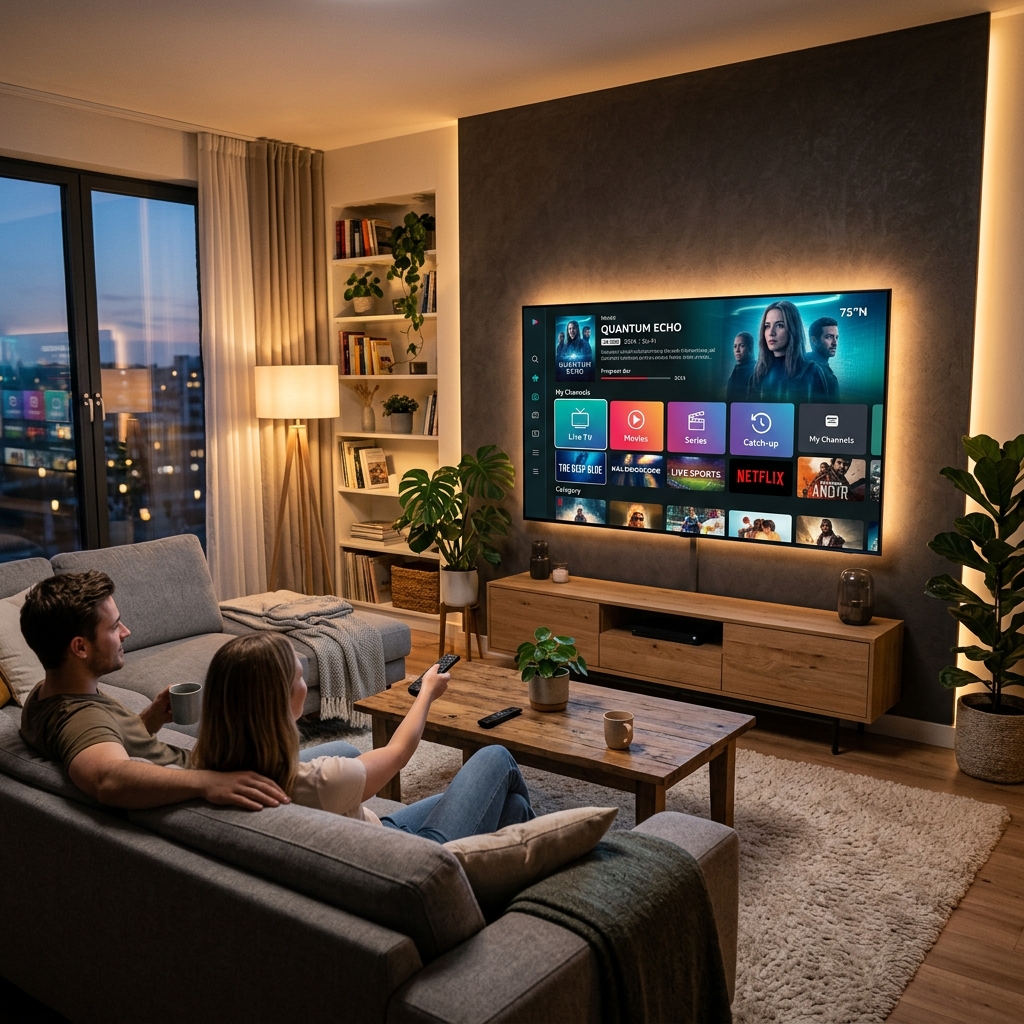
What is IPTV?
Let’s keep it beautifully simple. IPTV stands for Internet Protocol Television.
Instead of receiving your television programs via giant satellite dishes attached to your roof, a complex web of coaxial cables running under the street, or a dusty old antenna, you simply receive your TV broadcasts straight through your internet connection.
Think about how you use YouTube or Netflix. When you pull up a video on those platforms, it streams directly over your Wi-Fi or wired internet connection. IPTV does the exact same thing, but instead of just showing you pre-recorded videos, it delivers live, real-time television right to your screen. You get the same live news channels, the same intense sports matches, and the same prime-time television premieres, but delivered much more efficiently and effectively.
If you want an easy analogy, think of traditional cable TV as receiving a physical letter in the mail, which takes time, physical infrastructure, and extra costs. IPTV is like receiving an email—instant, digital, and using the internet pipeline you already pay for.
How Does IPTV Work?
At first glance, hearing the term “Internet Protocol” might make it sound like something only a computer programmer could understand. But the way IPTV works is incredibly straightforward.
When you sign up for an traditional cable package, the cable company sends analog or digital signals through a dedicated physical cable right into a set-top box in your living room. The box translates that signal, and boom—you have a picture on your screen.
IPTV completely cuts out the physical cable middleman. Here’s a simple step-by-step breakdown of how the magic happens:
- The Request: When you click on a channel via your smart TV’s remote or your phone screen, you are essentially asking a server somewhere in the world to send you that specific video feed.
- The Translation: The live broadcast is quickly converted (encoded) into a digital format that can travel quickly over the internet.
- The Journey: Instead of moving as one massive, heavy signal, the video is chopped into billions of tiny digital "data packets." These packets travel securely and rapidly across the internet.
- The Reunion: Your device (like a Firestick or Smart TV) catches these tiny data packets, reassembles them in the blink of an eye, and plays them on your screen as a smooth, high-definition live video.
Because this relies exclusively on internet streaming instead of geographical cable infrastructure, you aren't severely limited by regions. This is the exact technology that allows a sports fan in London to smoothly watch a local sports channel broadcast straight from New York City. Want to dive deeper into getting the best connection? Read our IPTV Buffering Fix Guide.
Types of IPTV Services
Not all IPTV viewing is the same. The beauty of this technology lies in its incredible flexibility. Most premium packages include a combination of three key viewing formats. Let’s explore what they are.
Live TV
If you love watching the Super Bowl, live breaking news, or the dramatic finale of your favorite reality show exactly as it airs, this is for you. Live IPTV works the exact same way a live broadcast does. You tune into the stream in real-time alongside millions of other viewers. It's the traditional "lean back" television experience you already know and love.
Video on Demand (VOD)
Did you miss the latest blockbuster movie in theaters? With Video on Demand (VOD), you don't have to wait for the movie to air on a scheduled channel. VOD is essentially a massive library of digitized movies, complete TV series, and documentaries. You select what you want, hit play, and it starts streaming immediately—similar to picking a movie on Netflix or Disney+.
Time-Shifted TV
Have you ever started watching a game 20 minutes late and wished you could just rewind live TV? Time-shifted TV (also known as Catch-Up TV) allows you to "go back in time." Many IPTV services record channels on their servers for a certain number of days (usually 7 days). This means you can play a broadcast that aired yesterday as if it were happening right now. No more racing home to catch the start of a show!
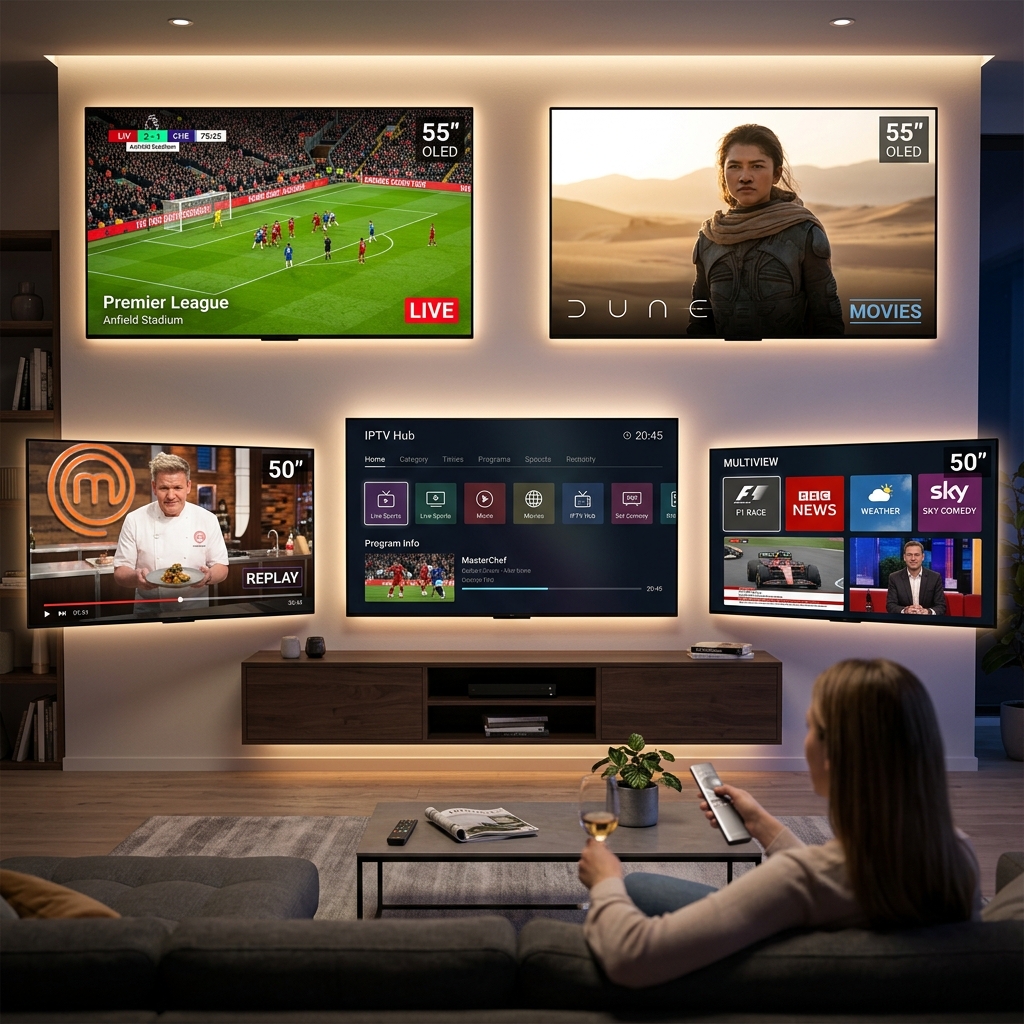
Devices That Support IPTV
One of the biggest reasons people love learning about the IPTV meaning is the absolute freedom of hardware. You are not forced to rent an ugly, clunky cable box for $15 a month simply to watch TV.
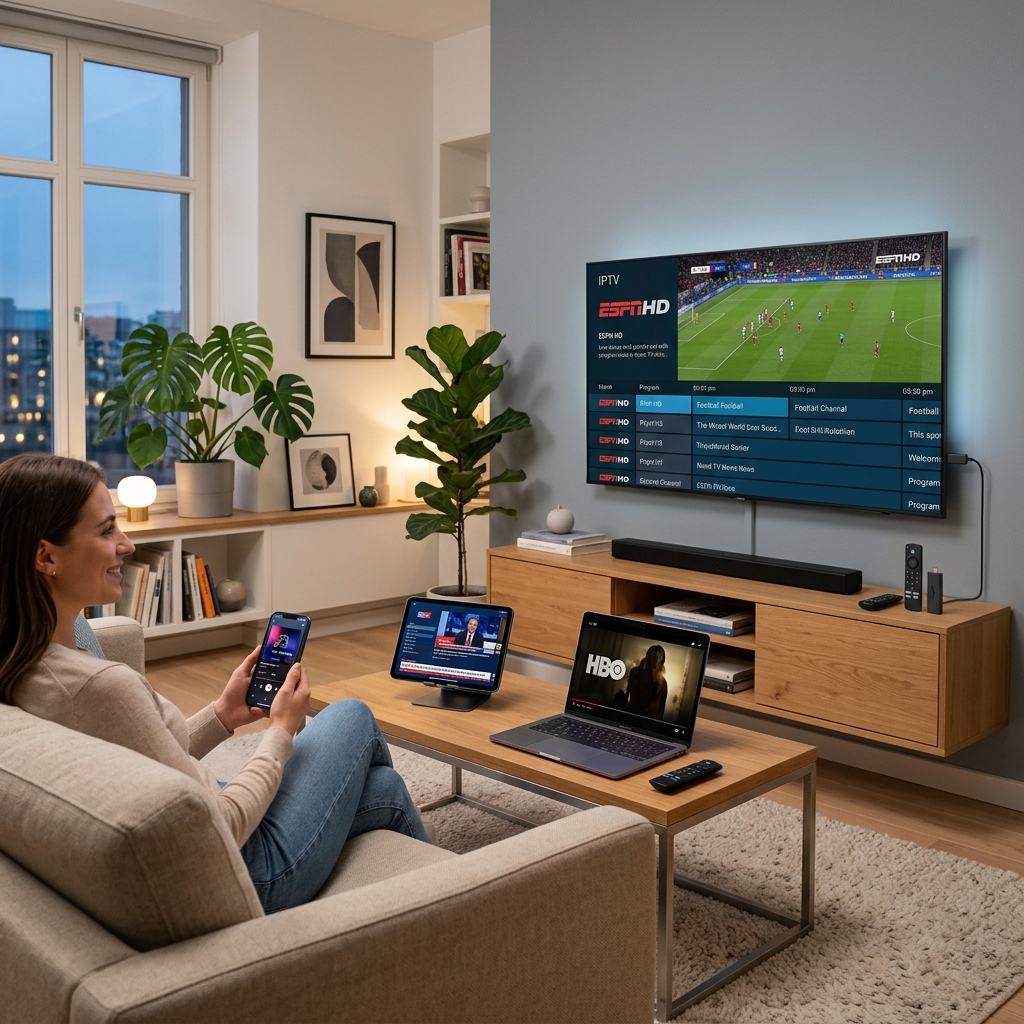
IPTV is purely software-driven, which means it works on almost any device that can connect to the internet and install apps. Here is a breakdown of exactly what devices you can use:
- Smart TVs: The easiest and most popular route. If you own a modern Samsung (Tizen), LG (WebOS), or Android TV, you can simply download an IPTV player directly from the built-in app store.
- Firestick & Android TV Boxes: Don't have a Smart TV? A cheap and powerful Amazon Firestick or an Android Box converts any standard television into a streaming powerhouse. (Check out our guide for the Best IPTV for Firestick).
- Android / iOS Smartphones & Tablets: Whether you are traveling on a train, waiting at a doctor’s office, or simply lying in bed, you can stream hundreds of premium channels right to your iPhone or Android device.
- PC and Mac: Yes, you can even boot up VLC player or dedicated Windows/Mac software to stream channels over your desktop monitor or laptop.
IPTV vs Traditional TV
Now that we know what it is, a common question pops up: is it actually better than the expensive cable bundle I currently have? To make things incredibly clear, let's look at the tale of the tape.
| Feature | IPTV | Traditional Cable / Satellite TV |
|---|---|---|
| Price | Very cheap (Usually $10-$15/month) | Very expensive (Often $80-$150+/month) |
| Installation | Zero installation. Instant activation. | Requires booking engineers, wiring, and dishes. |
| Contracts | Pay-as-you-go, no long-term commitments. | Rigid 12 to 24-month lock-in contracts. |
| Channels | Usually 8,000+ global channels | Usually around 100-300 local/regional channels |
| Flexibility | Watch anywhere with internet (phone, laptop) | Stuck to the television where the box sits |
It isn't hard to see why the shift is happening. Not only are you getting significantly more content, but the lack of hidden fees, hardware rentals, and long-term contracts makes IPTV an aggressive modern upgrade.
Is IPTV Legal?
This is a fantastic question and one that should be approached carefully.
The simplest answer is: The technology of IPTV is 100% legal.
In fact, major commercial corporations like AT&T, Hulu + Live TV, and Sling TV all utilize Internet Protocol Television technology. The legal gray area entirely depends on who the provider is, and whether that specific provider actually owns the broadcasting rights to the streams they are serving you.
When you subscribe to a robust, legitimate, licensed IPTV service provider, you are completely within your legal rights. Those businesses secure the rights to pass the content along to their consumers. However, if you purchase a sketchy $2/month subscription off a random forum, there's a strong chance the operators do not have proper broadcasting rights. For most users looking into this space, maintaining an educational approach and doing your research on premium, established providers ensures that you remain safe and sound.
Is IPTV Safe?
Yes, standard video streaming is completely safe. You aren't downloading sketchy files to your hard drive; you are merely streaming video packets in real-time.
However, because you are dealing with online video streams, maintaining your digital privacy is always a smart and practical move. To achieve the absolute highest level of security, many savvy users choose to pair their streaming apps with a VPN (Virtual Private Network).
A VPN cloaks your IP address, completely masking your internet activity. This means your Internet Service Provider (ISP) won't instantly throttle your connection when they detect heavy video traffic, keeping your streams smooth, fast, and 100% private.
Benefits of IPTV
Still trying to summarize why moving away from traditional broadcasting is the right idea? Let’s wrap all of the incredible benefits into a tight, easy-to-read list:
- Incredible Cost Savings: Shaving hundreds of dollars off your annual entertainment budget without making sacrifices.
- Massive Global Library: Gaining access to international events, global news stations, and niche sports channels that your local cable company simply doesn't carry.
- On-Demand Supremacy: Missing exactly zero of your favorite movies thanks to powerful VOD libraries included for free.
- Ultimate Portability: Taking your television package with you on vacation, to the office, or into a hotel room.
- No More Ugly Hardware: Freeing up space in your living room and dropping the cost of box rentals.
Disadvantages of IPTV
We promised an honest and complete guide, so we have to address the drawbacks. While it’s fantastic, there are a few things to keep in mind:
- Internet Reliability is Mandatory: If your Wi-Fi crashes or your internet router dies, your television dies with it. You are entirely at the mercy of your internet connection.
- Occasional Buffering: Unlike a hardwired cable that relies on a localized physical line, internet speeds fluctuate. If you are experiencing high latency on your home network, you might experience occasional freezing during peak hours.
- Quality Varies Greatly by Provider: Because the market is enormous, searching for top-tier quality can be difficult. Some providers overcrowd their servers, resulting in a poor viewing experience.
How to Get Started with IPTV
Ready to make the jump? Don't worry, the setup is delightfully simple and doesn’t require any technical degree. Here is your fail-proof process:
- Test Your Internet Speed: Make sure your connection is ready. For smooth high-definition viewing, you should comfortably have at least 15-25 Mbps download speeds.
- Choose a Premium Provider: Take your time evaluating well-reviewed options. If you want a phenomenal and stable experience, Best IPTV Subscription 2026 offers a powerful platform with thousands of crystal-clear live channels, immense VOD collections, and industry-leading customer support.
- Pick Your Favorite Device: Grab your smart TV remote or your Firestick.
- Install an IPTV Player App: Download apps like TiviMate, IPTV Smarters, or XCIPTV directly from standard App Stores.
- Enter Your Details: the premium provider will send you a Username, Password, and Server URL. Plug them into your downloaded app.
- Grab the Popcorn: That's it! Your channel list will suddenly populate, and you are officially ready to watch.
FAQ Section
What is IPTV and how does it work? IPTV is a broadcasting technology that uses your internet connection to deliver live television and on-demand movies, entirely replacing traditional cable and satellite. It works by having your TV ping a central server, which then sends the digital video feed straight to your screen in real time.
Is IPTV better than cable? For the vast majority of people, yes. It provides significantly more content, much greater flexibility, and does it all at a fraction of the cost without frustrating long-term contracts.
Do I need fast internet? Yes. Since you are heavily streaming video data, a stable internet connection is required. We heavily recommend having at least 20 Mbps to stream full 1080p HD, and 50+ Mbps if you wish to stream available 4K content flawlessly.
Can IPTV replace Netflix? Absolutely. Many major providers pack their servers heavily with a "Video on Demand" library that matches or exceeds the libraries of major streaming platforms. This effectively allows you to combine your Netflix and live TV bill into one single service.
Is IPTV legal in my country? Using the technology itself is perfectly legal globally. However, to remain fully compliant with copyright laws, it is your responsibility to ensure the specific provider you choose operates with proper licensing and distribution rights within your jurisdiction.
Final Thoughts
We’ve covered a tremendous amount of ground today. The real answer to the burning question of "what is IPTV?" is that it represents the undeniable future of home entertainment.
Why feel hopelessly trapped in expensive deals, tangled cables, and awful customer support when there's a highly affordable, intensely powerful alternative staring right at you? The ability to command thousands of HD channels alongside an incredible library of movies is no longer a luxury; it is something you can easily set up in an afternoon.
Stop paying too much for too little. If you're finally ready to cut the cord, elevate your viewing experience, and take total control over your television, launch your free trial today and see exactly what you've been missing. Happy watching!
Ready to Stream with Fubo TV?
Start your free trial today. No credit card required.
Learn more on the Fubo TV homepage or explore subscription plans.
Start Free Trial →